How Should Trees Be Maintained Around Parking Lots and Commercial Buildings in Eugene?
How Should Trees Be Maintained Around Parking Lots and Commercial Buildings in Eugene?
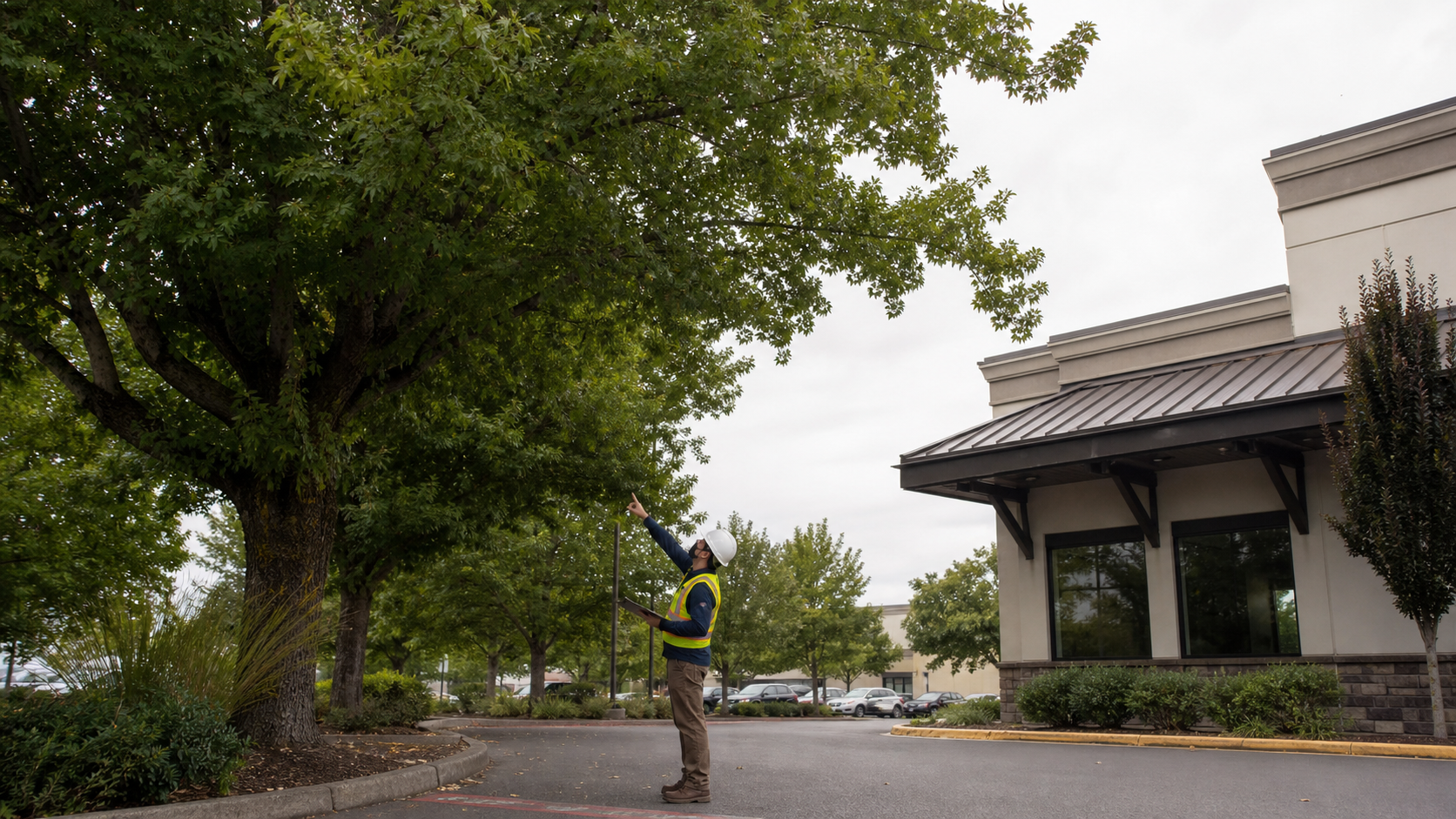
Commercial tree maintenance should protect sight lines, pedestrians, vehicles, roofs, lighting, signs, pavement, and utilities while preserving healthy crown and root space. Use an inventory, defined clearance standards, structural pruning, mulch, irrigation review, and documented inspections.
This Eugene-focused guide gives homeowners, landlords, HOA boards, and property managers a practical starting point. It is general information, not a substitute for an on-site tree assessment, City or utility direction, an insurance decision, or legal advice.
Why the Answer Depends on the Tree and Site
Eugene properties combine mature Pacific Northwest trees with houses, sidewalks, narrow side yards, commercial parking, and overhead utilities. Wet winter soil, wind, ice, summer drought, and construction can change how trees grow and fail. A useful recommendation considers the whole tree, the site, and what lies within reach.
A small defect above a busy entrance can matter more than a larger defect over an unused planting bed. Species, roots, trunk condition, crown structure, targets, access, and the purpose of the work belong in the same decision.
Key Factors to Evaluate
A tree professional will usually consider:
- tree condition, size, species, history, and recent changes
- ownership, boundaries, permits, utilities, and governing documents
- people, buildings, vehicles, walkways, and other targets
- qualified contractors, access, cleanup, and written scope
- monitoring, replacement planning, records, and follow-up
These details distinguish routine maintenance from an urgent hazard. They also affect whether the practical response is monitoring, pruning, supplemental support, removal, utility coordination, or a more detailed assessment.
What to Do Next
- document the tree, site, concern, and relevant history
- confirm ownership and current agency or utility requirements
- use a qualified assessment when the decision has significant consequences
- record the decision, work completed, and follow-up date
If a tree is actively falling, resting on a structure, blocking an exit, or touching electrical conductors, keep people away and contact the appropriate emergency service or utility. Take photographs only from a safe location.
What a Clear Professional Scope Should Include
A written scope should identify the tree and explain what will be assessed, pruned, supported, removed, hauled, or left on site. It should address access, nearby property, cleanup, permits or utility coordination when applicable, and limits created by hidden decay, underground conflicts, weather, or site conditions.
For this question, start with commercial tree services in Eugene, OR. When the correct treatment is uncertain, an assessment before production work can prevent an unnecessary removal or an incomplete pruning plan.
Common Mistakes to Avoid
- acting before confirming authority or responsibility
- using a vague scope that omits cleanup or follow-up
- treating one photograph or symptom as the complete assessment
Do-it-yourself cutting is especially hazardous when wood is dead, split, leaning, storm-loaded, suspended, or near utilities. A cut can release stored force or change balance without warning.
Related Eugene Tree Service Resources
Relevant services
- Eugene tree service location page
- commercial tree services in Eugene, OR
- tree assessments in Eugene, OR
- tree pruning in Eugene, OR
Related local guides
- What Are the Signs of a Dangerous Tree in Eugene, OR?
- Should I Remove a Tree With Mushrooms Growing at the Base?
- How Do I Know If My Tree Is Dead or Just Dormant?
Official Sources and Further Reading
Rules and agency guidance can change, so check current sources before acting:
Frequently Asked Questions
Does this automatically require tree removal?
No. Pruning, support, monitoring, target changes, or replacement planning may be reasonable depending on the site.
Who should make the decision?
The owner or authorized manager should combine qualified tree advice with current City, utility, insurance, and legal requirements.
What records should be kept?
Keep reports, photos, permits, notices, contracts, invoices, complaints, and follow-up recommendations.
Get a Tree-Specific Recommendation in Eugene
Eugene Tree Service can inspect the tree, explain practical options, and prepare a clear scope. Call (541) 515-7257 or request a free estimate online.