How Fast Can Emergency Tree Removal Be Done in Eugene?
How Fast Can Emergency Tree Removal Be Done in Eugene?
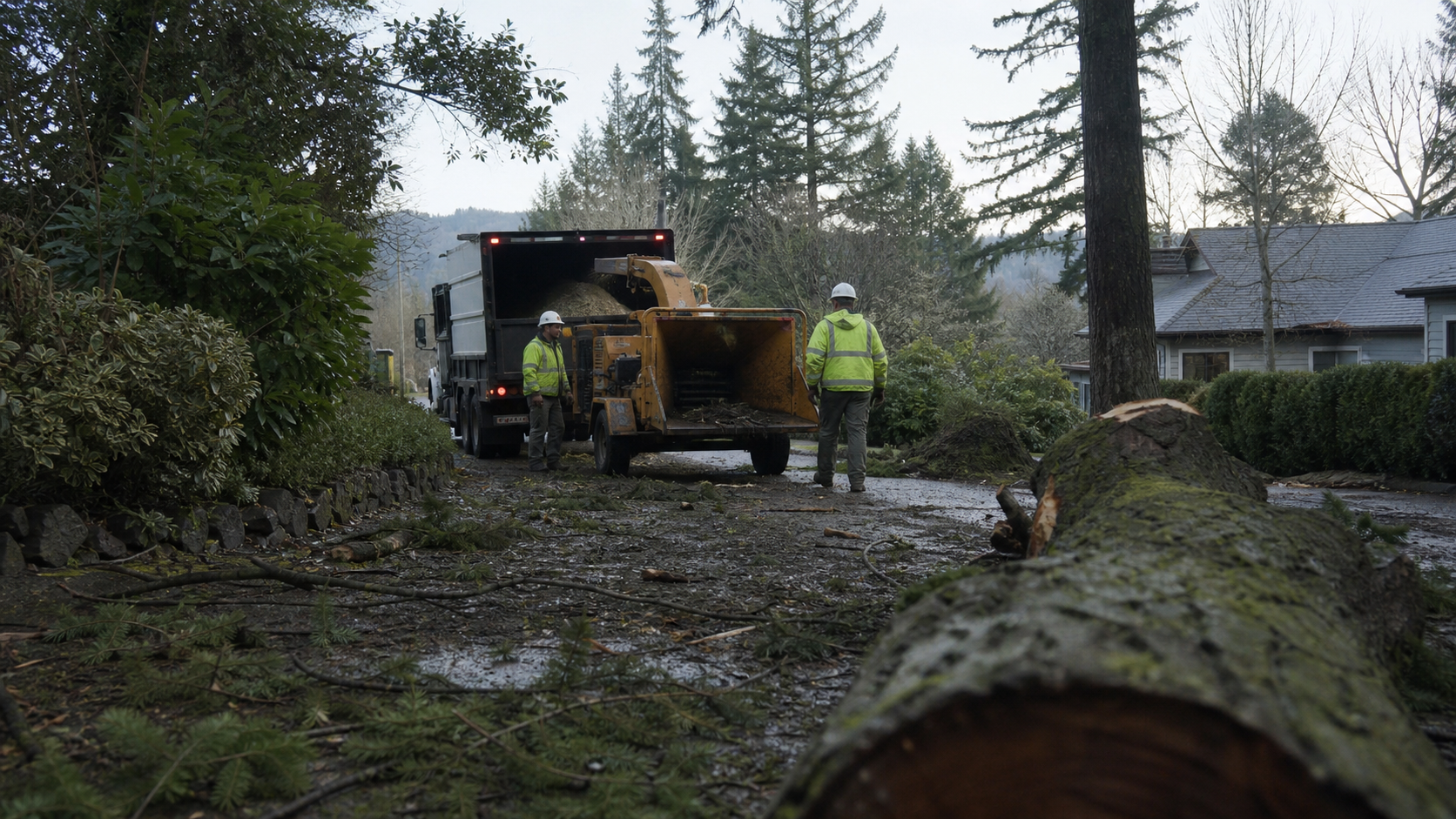
Response time depends on immediate danger, storm demand, road and utility access, crew and equipment availability, and whether lines or structures are involved. A crew may first stabilize the site or restore access, then return for complete removal and cleanup.
This Eugene-focused guide gives homeowners, landlords, HOA boards, and property managers a practical starting point. It is general information, not a substitute for an on-site tree assessment, City or utility direction, an insurance decision, or legal advice.
Why the Answer Depends on the Tree and Site
Eugene properties combine mature Pacific Northwest trees with houses, sidewalks, narrow side yards, commercial parking, and overhead utilities. Wet winter soil, wind, ice, summer drought, and construction can change how trees grow and fail. A useful recommendation considers the whole tree, the site, and what lies within reach.
A small defect above a busy entrance can matter more than a larger defect over an unused planting bed. Species, roots, trunk condition, crown structure, targets, access, and the purpose of the work belong in the same decision.
Key Factors to Evaluate
A tree professional will usually consider:
- injury risk, active failure, occupied structures, and blocked exits
- electrical, gas, telecom, or municipal coordination
- weather and safe working conditions
- crane, lift, traffic control, and disposal needs
- number of regional calls after a major storm
These details distinguish routine maintenance from an urgent hazard. They also affect whether the practical response is monitoring, pruning, supplemental support, removal, utility coordination, or a more detailed assessment.
What to Do Next
- describe the exact hazard and address when calling
- send safe wide photos of access and targets
- report utilities through the correct provider
- separate urgent stabilization from non-urgent cleanup
If a tree is actively falling, resting on a structure, blocking an exit, or touching electrical conductors, keep people away and contact the appropriate emergency service or utility. Take photographs only from a safe location.
What a Clear Professional Scope Should Include
A written scope should identify the tree and explain what will be assessed, pruned, supported, removed, hauled, or left on site. It should address access, nearby property, cleanup, permits or utility coordination when applicable, and limits created by hidden decay, underground conflicts, weather, or site conditions.
For this question, start with emergency tree removal in Eugene, OR. When the correct treatment is uncertain, an assessment before production work can prevent an unnecessary removal or an incomplete pruning plan.
Common Mistakes to Avoid
- expecting a firm arrival time before utilities release the site
- calling routine work an emergency to skip the queue
- entering the area to improve photographs
Do-it-yourself cutting is especially hazardous when wood is dead, split, leaning, storm-loaded, suspended, or near utilities. A cut can release stored force or change balance without warning.
Related Eugene Tree Service Resources
Relevant services
Related local guides
- What Should I Do When a Tree Falls on My House?
- Can a Storm-Damaged Tree Be Saved?
- Does Homeowners Insurance Cover Tree Removal?
Frequently Asked Questions
What gets highest priority?
Active threats to people, occupied structures, critical access, and utilities generally receive priority.
Can work happen at night?
Only when conditions, lighting, access, and urgency allow safe operations.
Will cleanup happen immediately?
Not always. Stabilization and access may precede hauling, stump work, and restoration.
Get a Tree-Specific Recommendation in Eugene
Eugene Tree Service can inspect the tree, explain practical options, and prepare a clear scope. Call (541) 515-7257 or request a free estimate online.