Will Stump Grinding Remove All the Tree Roots in Eugene?
Will Stump Grinding Remove All the Tree Roots in Eugene?
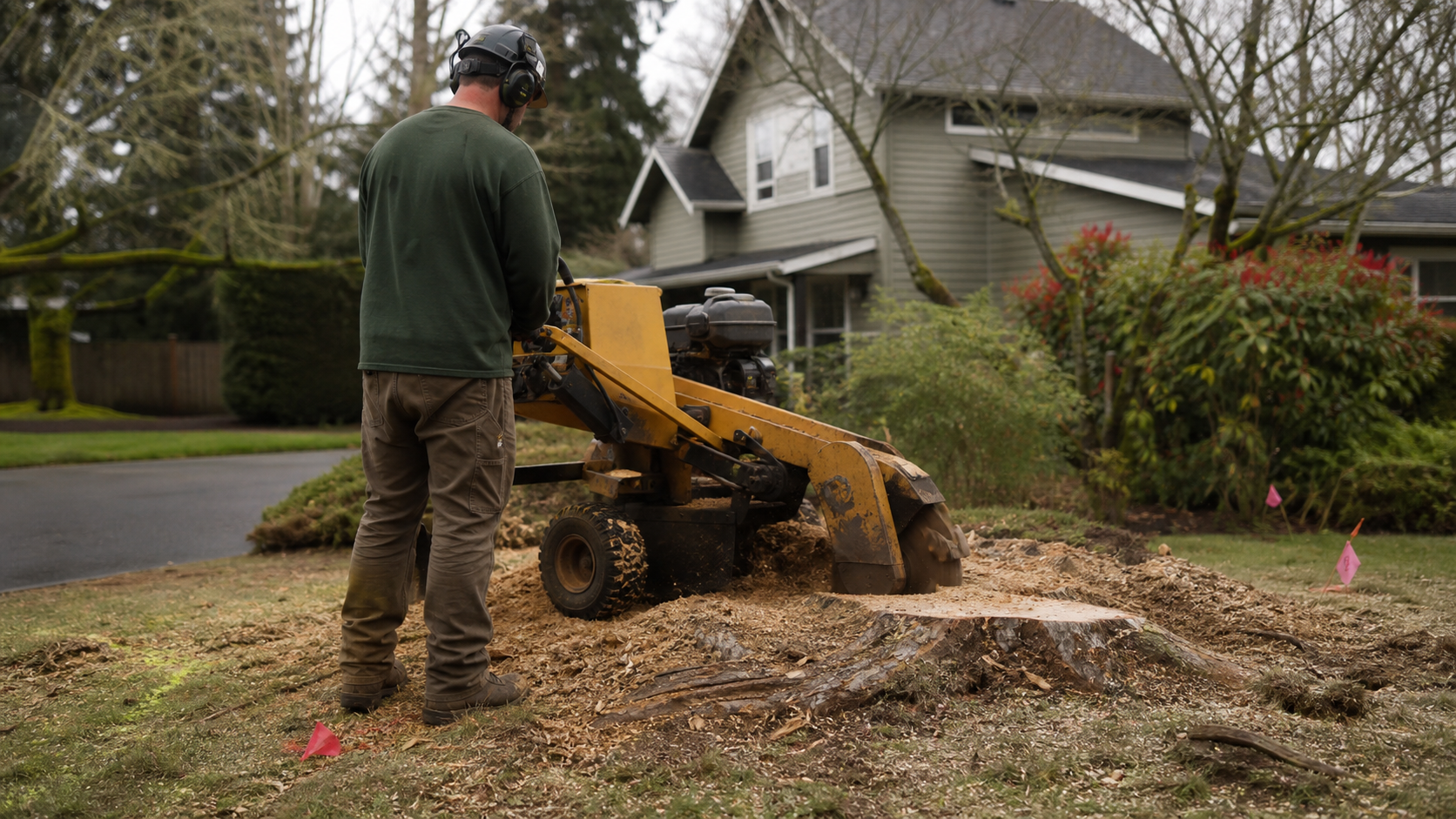
No. Stump grinding removes the visible stump and selected upper roots within the machine's reach, but most of the root system remains underground and decays gradually. Excavating every root would cause far more soil disturbance and is rarely part of routine residential work.
This Eugene-focused guide explains the decision points homeowners, landlords, HOA boards, and property managers should understand before requesting work. It is general information, not a substitute for an on-site assessment, utility direction, insurance coverage decision, or legal advice.
Why the Answer Depends on the Tree and Site
Eugene properties combine mature Pacific Northwest trees with homes, sidewalks, narrow side yards, rental housing, commercial parking, and overhead utilities. Wet winter soil, wind, occasional ice, summer drought, and construction can change how trees grow and fail. The useful question is not only what the tree looks like, but what has changed and what lies within reach.
A smaller tree beside an occupied building can deserve more attention than a taller tree in an open area. Species, roots, trunk condition, crown structure, targets, access, and the purpose of the work all belong in the same decision.
Key Factors to Evaluate
A tree professional will usually consider:
- stump diameter, flare, species, and number of surface roots
- requested grinding depth and machine access
- utilities, irrigation, paving, fences, and grade
- future lawn, planting, construction, or hardscape use
- chip volume, backfill, settlement, and possible sprouting
Those details help distinguish routine maintenance from an urgent hazard. They also determine whether the practical response is monitoring, selective pruning, supplemental support, stump grinding, full removal, utility coordination, or a more detailed assessment.
What to Do Next
- tell the contractor how the area will be used
- locate utilities and irrigation before grinding
- agree on depth, surface-root limits, and chip handling
- expect settling and add suitable soil as decomposition continues
If a tree is actively falling, resting on a structure, blocking an exit, or touching electrical conductors, keep people away and contact the appropriate emergency service or utility. Take photographs only from a safe location.
What a Clear Professional Scope Should Include
A written scope should identify the tree and explain what will be assessed, pruned, supported, removed, ground, hauled, or left on site. It should address access, nearby property, cleanup, permits or utility coordination when applicable, and limits created by hidden decay, underground conflicts, weather, or site conditions.
For this question, start with stump removal and grinding in Eugene, OR. When the correct treatment is uncertain, an assessment before production work can prevent an unnecessary removal or an incomplete pruning plan.
Common Mistakes to Avoid
- assuming the ground is immediately ready for a footing
- planting directly in a mound of fresh wood chips
- requesting deep grinding without checking utilities
Do-it-yourself cutting is especially hazardous when wood is dead, split, leaning, storm-loaded, suspended, or near utilities. A cut can release stored force or change balance without warning.
Related Eugene Tree Service Resources
Relevant services
Related local guides
- What Should I Do When Tree Roots Lift a Sidewalk or Driveway?
- How Much Does Stump Grinding Cost in Eugene, OR?
- Are Douglas Fir Trees Safe Near Homes in Eugene?
Frequently Asked Questions
How long do roots take to decay?
It varies by species, root size, soil, and moisture; large roots can persist for years.
Will the roots keep growing?
Roots of a fully removed tree usually decline, though some species can sprout from roots or stump tissue.
Can the hole be filled with grindings?
Some grindings can be reused, but planting and lawn areas typically need excess chips removed and soil added.
Get a Tree-Specific Recommendation in Eugene
Eugene Tree Service can inspect the tree, explain practical options, and prepare a clear scope. Call (541) 515-7257 or request a free estimate online.